
Stop Wasting Budget on Bad Ideas: How AI Validates What Actually Works
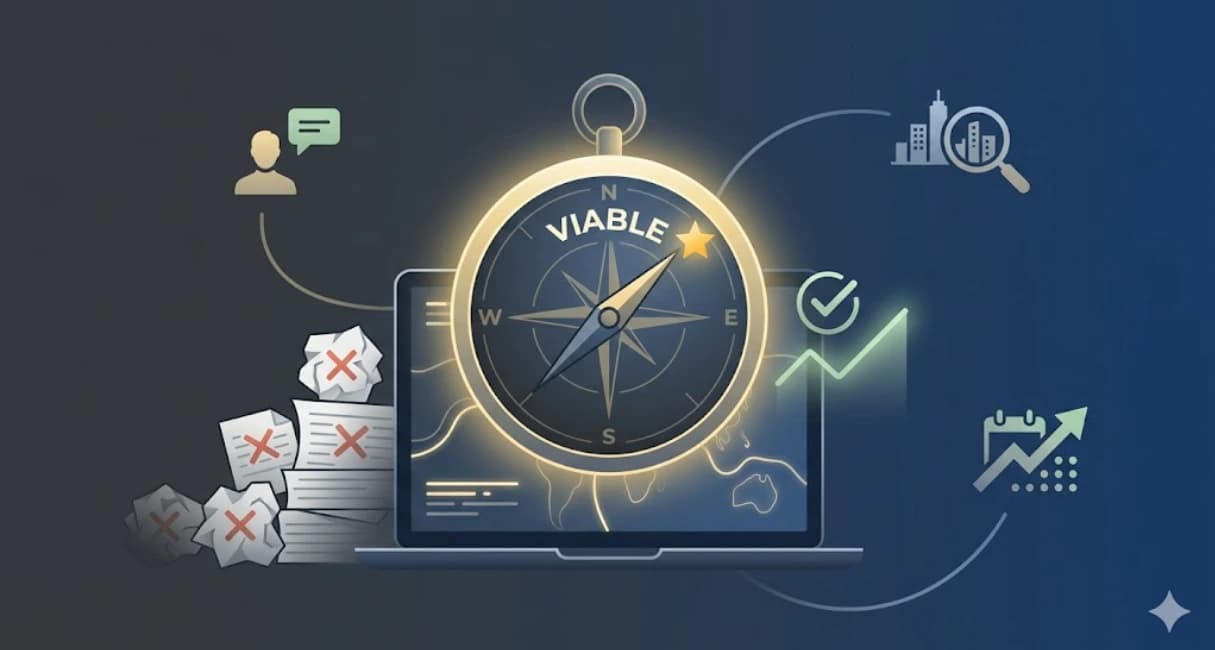
Most ideas fail because of bad timing, not bad thinking. Learn how AI-powered idea validation helps business leaders test concepts, reduce risk, and stop wasting budget before development begins.
The Real Reason Most Ideas Fail
You have probably experienced this before. Someone on your team brings a promising idea to the table. It feels right. The team gets excited. Resources are allocated, budgets are approved, and development begins. Then, months later, the launch falls flat. Not because the idea was terrible, but because the timing was wrong, or the audience wasn't ready, or the market had already shifted.
This happens more often than most business leaders care to admit. Many ideas fail not because they lack merit, but because they are launched at the wrong time or targeted at the wrong audience. And without a structured way to test these variables early, you are essentially gambling with your budget. That is where AI-powered idea validation changes the game entirely.
What Is Idea Validation Using AI?
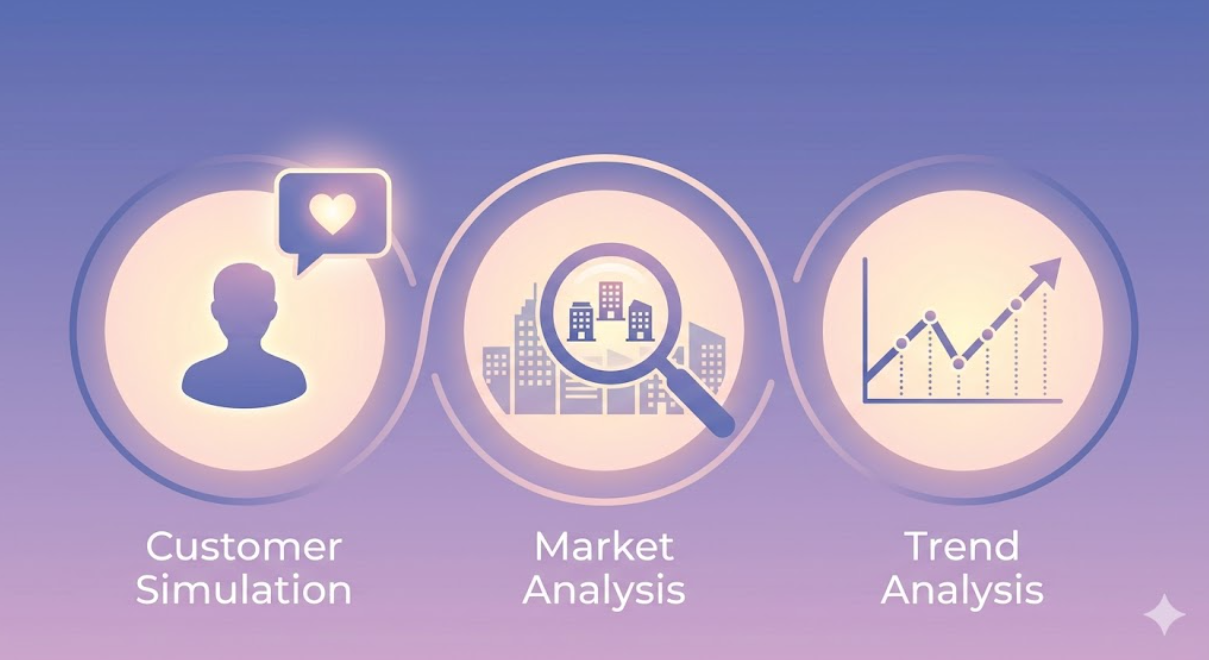
Let us start with a clear definition. Idea validation using AI involves analyzing a concept through three lenses: simulated customer reactions, market data and competition insights, and trend analysis. Instead of relying on gut feelings or expensive pilot programs, you feed your idea into an AI system that evaluates it against real-world signals.
The AI examines how different customer personas might react to your concept. It scans the competitive landscape to understand existing solutions and market gaps. It analyzes trend data to determine whether interest in your category is growing, flattening, or declining. By combining these inputs, the AI estimates the viability of your idea and highlights potential risks before you spend a dollar on development.
For business leaders, this means moving from "I think this will work" to "the data suggests this has a 70 percent chance of success under current conditions." That shift is enormous.
Why Idea Validation Matters for Your Bottom Line
Here is a hard truth that every businessperson already knows deep down. Good ideas are everywhere. What is rare is the ability to know which ideas deserve resources and which ones should be killed quickly. The cost of being wrong is not just the money you spend developing a bad idea. It is the opportunity cost of not pursuing the right one.
AI helps address this in four specific ways. First, it identifies demand early, allowing you to enter markets before they become crowded. Second, it highlights competitive pressure, so you know exactly who you will be fighting for attention. Third, it evaluates timing based on trends, telling you whether now is the right moment or if you should wait. Fourth, it gives you a window into audience reactions before you build anything, saving you from expensive missteps.
In short, idea validation using AI turns uncertainty into a manageable risk. You stop guessing and start knowing.
How AI Actually Validates Ideas
You might be wondering how this works under the hood. The answer is simpler than you think. AI typically uses three core components working together to produce a clear picture of your idea's potential.
The first component is customer simulation. AI-generated customers are used to simulate how different user segments might react to your idea. Instead of asking five people in a focus group, you can test your concept against dozens of simulated personas that represent your actual market. These simulations reveal preference patterns, hesitation points, and emotional responses that would otherwise take weeks of research to uncover.
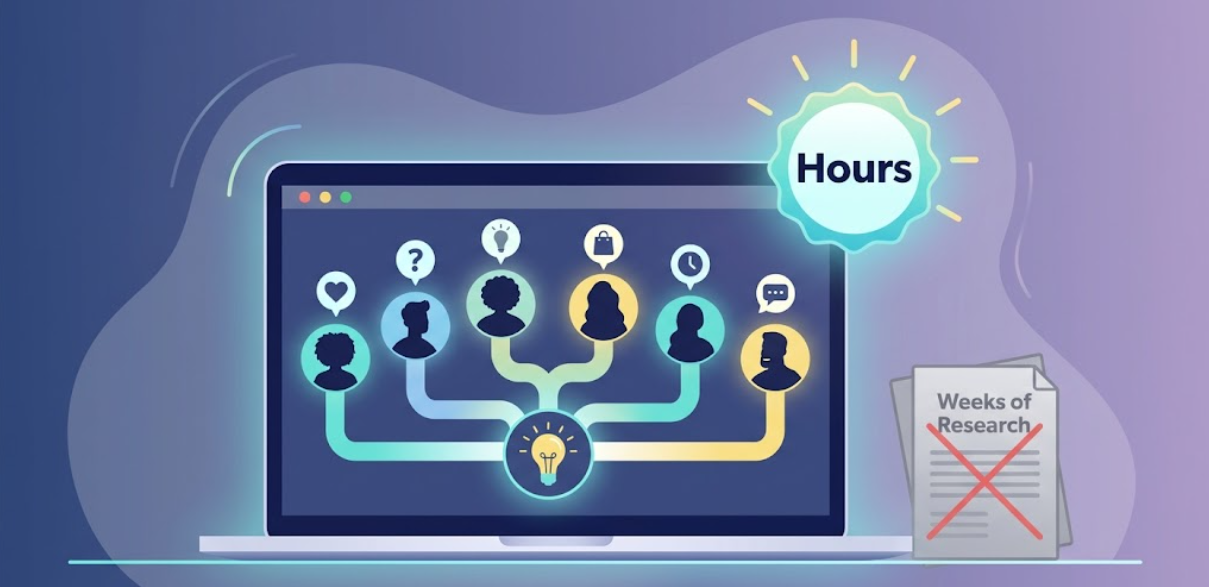
The second component is market analysis. Here, the AI scans web data to provide real-time insight into competitors, existing solutions, and current market conditions. It tells you who is already solving the problem you want to solve, how well they are doing it, and where their weaknesses lie. This intelligence is invaluable for positioning your idea effectively.
The third component is trend analysis. Trend data shows whether interest in your concept is increasing, stable, or declining over time. An idea that looks brilliant today might be entering a downward trend, while a different idea that seems modest could be riding a wave of growing demand. AI helps you see the difference clearly.
What Insights AI Can Provide
Once the analysis is complete, AI delivers structured, actionable insights that business leaders can use immediately. These are not vague suggestions or abstract predictions. They are concrete outputs designed to inform real decisions.
Specifically, AI can estimate market fit, demand potential, competitive intensity, and adoption likelihood. It translates these estimates into formats that busy executives can act on without digging through spreadsheets. You might receive an opportunity score that ranks your idea against others in your pipeline. You might get a risk assessment that flags specific vulnerabilities, such as a strong incumbent competitor or a seasonal demand pattern. You might receive strategic recommendations telling you whether to proceed, pivot, or pause.
These outputs do not replace your judgment. They inform it. And that is exactly what business leaders need to make faster, smarter calls.
The Benefits Business Leaders Cannot Ignore
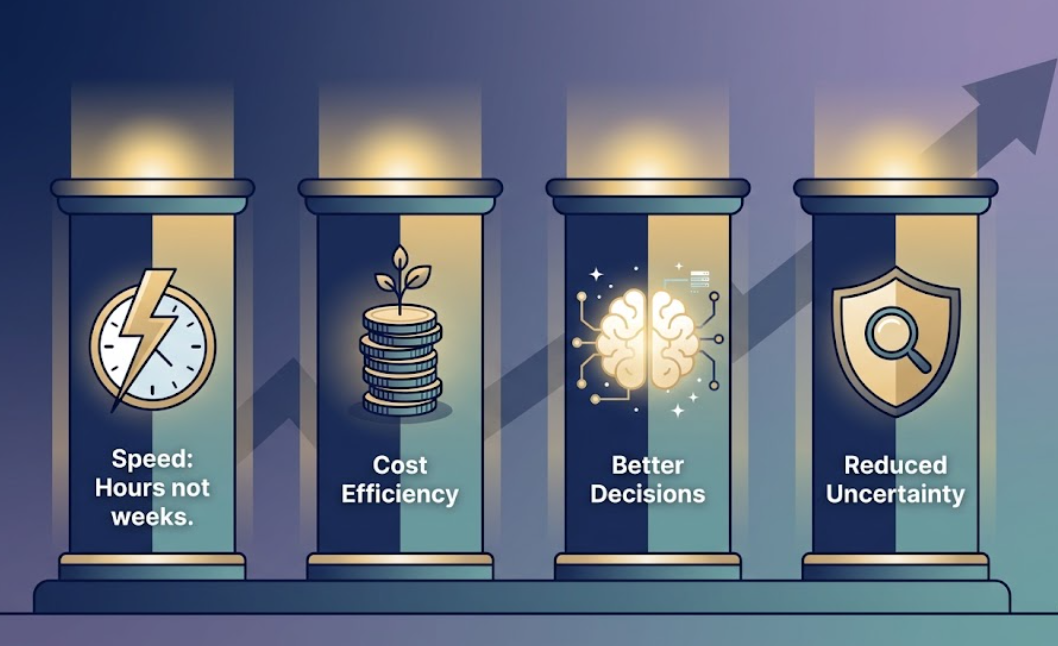
If you are responsible for budgets and outcomes, the benefits of AI-powered idea validation should grab your attention immediately. The most obvious advantage is speed. Where traditional validation methods might take weeks or months of market research, surveys, and focus groups, AI can deliver insights in hours. That speed allows you to test more ideas and kill bad ones before they drain resources.
Cost efficiency is another major factor. Reducing the need for early investment means you can validate ten ideas for the price of what used to validate one. You stop spending money on development, design, and testing for concepts that never had a real chance.
Better decisions follow naturally. Instead of relying on whoever has the loudest voice in the room, you base your strategy on multiple data signals from customer simulations, market analysis, and trend data. Politics and intuition take a back seat to evidence.
Finally, AI reduces uncertainty before execution. You identify risks early, which means you can address them proactively rather than reacting to failures after launch. That is not just efficient. It is responsible leadership.
Know the Limitations
Of course, no business tool is perfect, and AI-powered validation has important constraints. The most significant limitation is that AI depends entirely on the quality of available data. If the underlying data is incomplete, outdated, or biased, your validation results will inherit those flaws.
Another limitation is that AI cannot fully predict real-world behavior. Simulated customer reactions are useful approximations, but they are not actual purchases. A simulated persona saying they love your idea does not guarantee that real customers will pull out their credit cards.
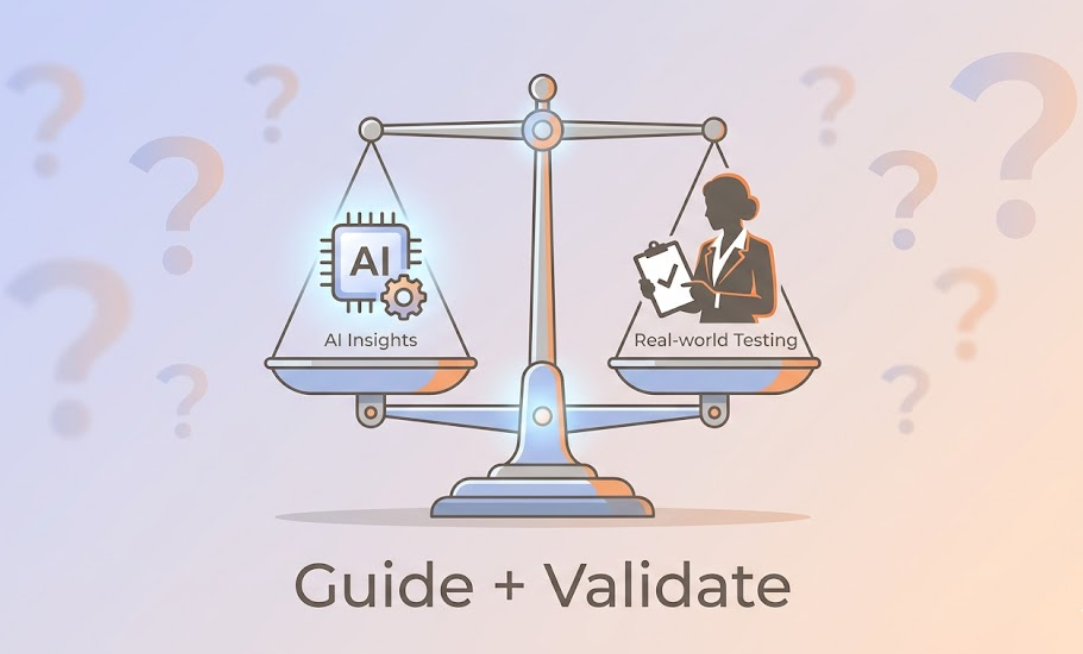
For these reasons, AI should never replace user testing or pilot launches. It is a powerful pre-filter that helps you decide which ideas deserve real-world validation, but it is not a crystal ball. Smart business leaders use AI to narrow their options, not to make final decisions without testing.
Best Practices for Business Leaders
If you want to use AI effectively for idea validation, follow these practical guidelines. First, always combine AI insights with real feedback from actual customers. Let the AI help you generate hypotheses, then go test those hypotheses with real humans in real market conditions.
Second, validate your ideas across multiple audience segments. An idea that scores well with one customer group might fail completely with another. AI can help you spot these differences, but you must act on them by tailoring your approach or choosing your primary market wisely.
Third, monitor trends continuously instead of treating validation as a one-time event. Markets shift. Competitors launch new features. Customer preferences evolve. Re-run your validation periodically to ensure your idea still makes sense in current conditions.
Fourth, treat AI outputs as guidance, not final decisions. The opportunity score is a data point, not a verdict. Use it alongside your strategic judgment, industry expertise, and understanding of your brand's unique position. The best decisions come from combining machine intelligence with human wisdom.
Conclusion: Validate Smarter, Move Faster
Idea validation using AI is transforming how businesses approach innovation. By combining customer simulation, market analysis, and trend data, it allows teams to explore ideas with greater confidence and significantly less risk than traditional methods.
For business leaders, the value is clear. You stop wasting budget on ideas that never had a chance. You move faster from concept to confident decision. You reduce uncertainty before committing significant resources. And you build a culture where data, not ego, guides what gets built.
No, AI does not eliminate uncertainty entirely. Nothing can. But it provides a structured, intelligent way to navigate uncertainty. And in business, that is the difference between gambling and leading.
Related Blogs
View All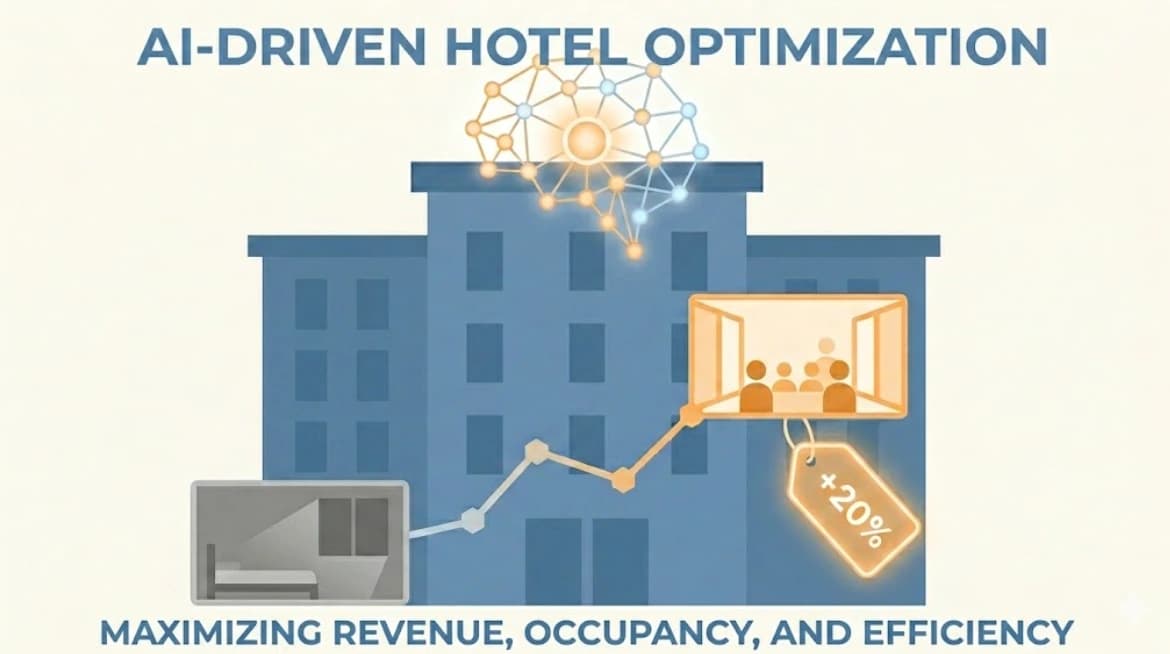
How AI Pricing Fills Empty Hotel Rooms and Maximizes Revenue
Recent
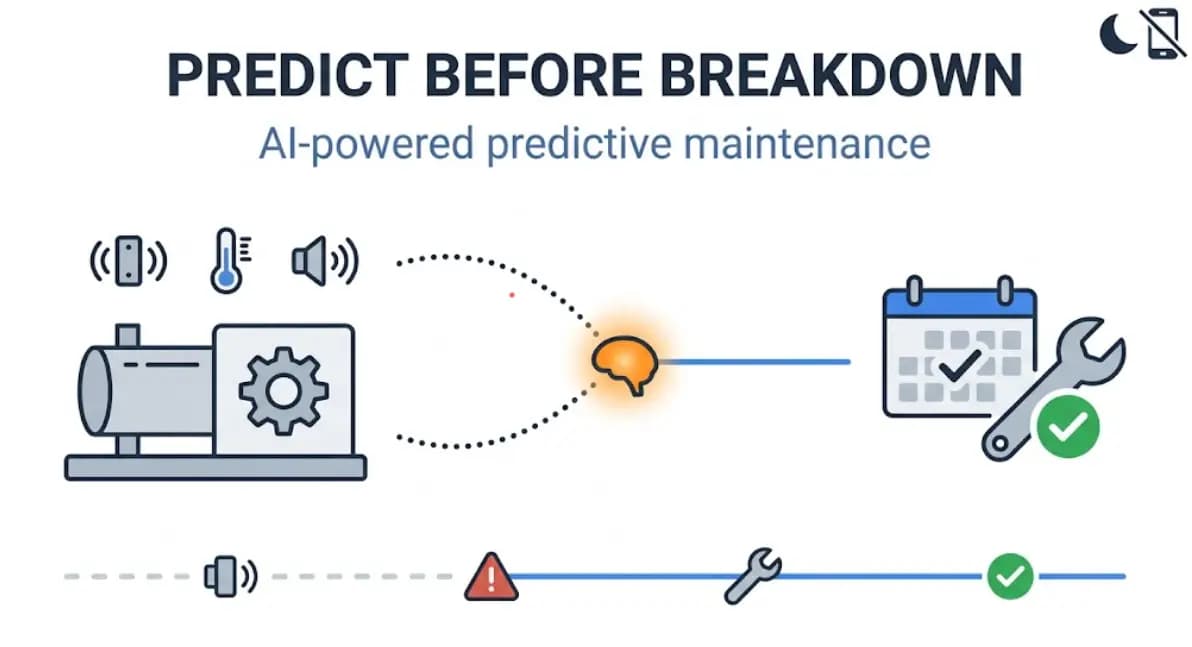
The Machine Failure: How AI Predicts Breakdowns Before They Stop Production
Recent
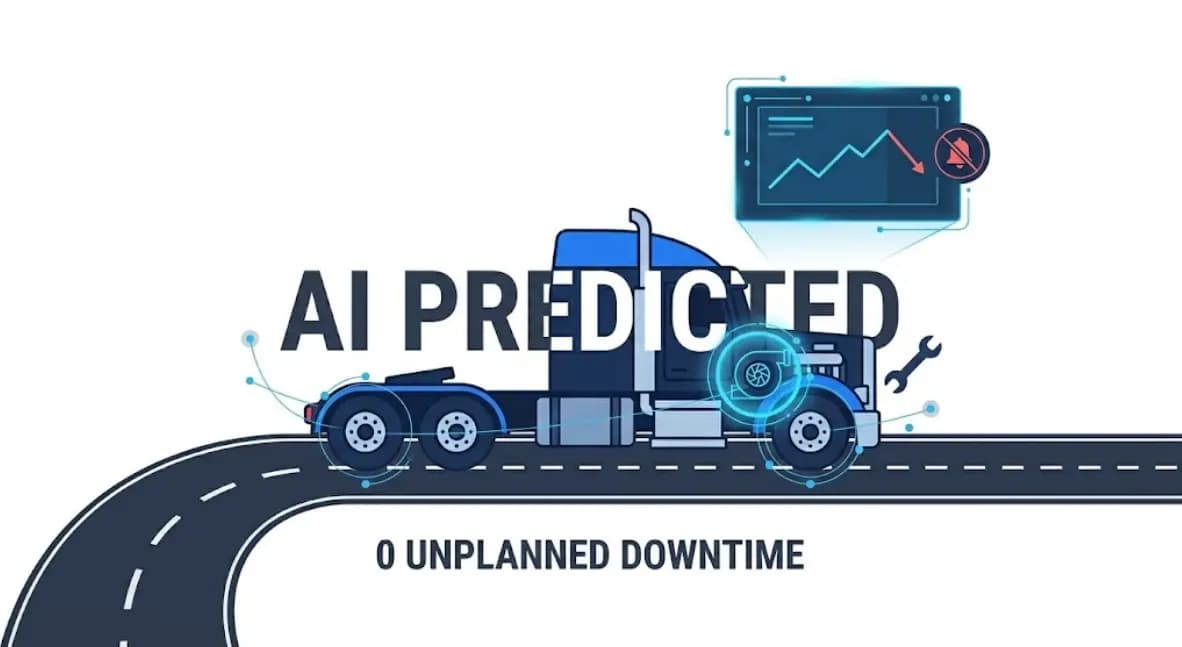
How AI Predicts Truck Failures Before They Happen
Recent
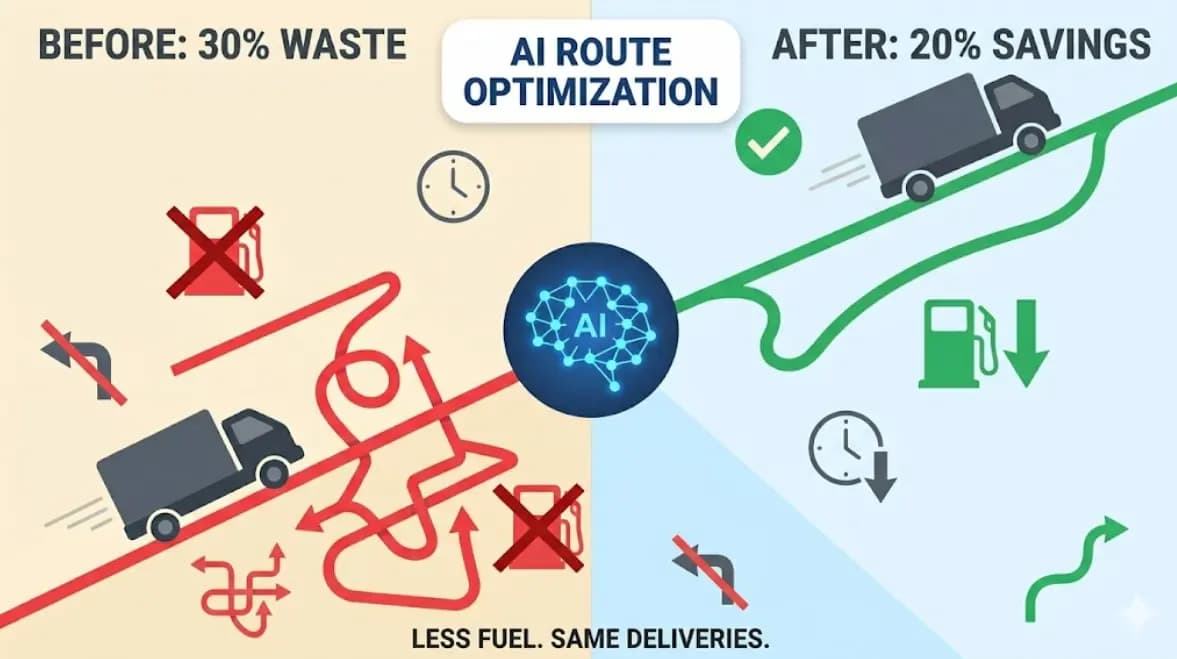
The Route That Bleeds Cash: How AI Cuts Fuel Costs Without Reducing Deliveries
Recent