
How AI Predicts Truck Failures Before They Happen
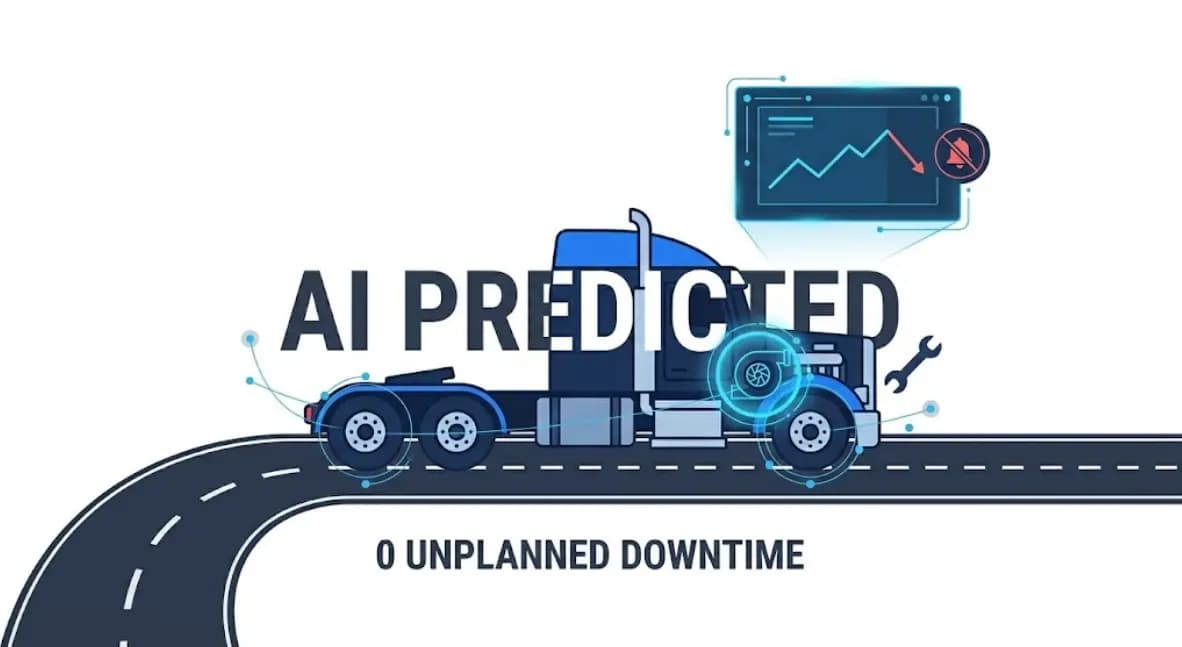
AI in logistics predicts truck breakdowns before they happen, reducing unplanned downtime by 40%. Learn how predictive maintenance saves millions in repair costs.
The economics of a broken truck
A truck breaks down on the highway. The driver calls dispatch. The load is late. A tow truck arrives. Hours are lost. The repair bill arrives. The customer invoices a late penalty. The math is brutal. A single unplanned breakdown costs between five hundred and two thousand dollars in direct expenses. Towing, parts, labor, and roadside assistance add up quickly. The indirect costs are worse. Late deliveries trigger contract penalties. Idle drivers accrue wages without revenue. Dispatchers scramble to reassign loads. Customer relationships strain.
Multiply this by a fleet of fifty trucks. Each truck breaks down two to three times annually. The total cost runs into six figures. Most of these breakdowns are predictable. The warning signs exist weeks before the failure. AI in logistics reads these signs. It predicts failures before they strand a driver on the shoulder. The result is unplanned downtime reduced by forty percent or more.
The failure cascade that no one sees
Truck components do not fail suddenly. They degrade gradually. A bearing wears. Temperatures rise. Vibrations increase. Clearances widen. The degradation continues until catastrophic failure. Human inspection schedules catch some of these patterns. Monthly checks. Quarterly overhauls. Annual replacements. But degradation does not follow a calendar. It follows usage, load, temperature, and driver behavior.
Consider an engine turbocharger. It spins at up to one hundred fifty thousand revolutions per minute. It operates at temperatures exceeding one thousand degrees Fahrenheit. A healthy turbo shows specific pressure and temperature patterns. A failing turbo shows subtle deviations. Slightly lower boost pressure. Slightly higher exhaust temperature. A human technician driving the truck might notice nothing. An AI monitoring sensor data in real time flags the deviation immediately. The turbo is replaced during scheduled maintenance, not on the highway shoulder.
How predictive AI reads the truck's vital signs
Modern trucks generate enormous data. Engine control modules report hundreds of parameters. Oil pressure. Coolant temperature. Fuel rail pressure. Exhaust gas recirculation flow. Aftertreatment differential pressure. Transmission output speed. Brake wear sensors. Tire pressure monitors. This data flows continuously through telematics systems. Most fleets use this data for basic reporting. Which trucks idled too long? Which drivers exceeded speed limits? The deeper patterns remain invisible to human analysts.
AI in logistics consumes this data stream and learns what normal looks like for each component on each truck. Not a generic specification from the manufacturer. The actual behavior of that specific turbocharger on that specific engine driven by that specific driver on that specific route. The AI builds a digital fingerprint of healthy operation. When current readings deviate from the fingerprint, the AI generates an alert. The severity of deviation predicts time to failure. A minor deviation means schedule inspection next week. A major deviation means ground the truck today.
The sensor gap and how AI bridges it
Not every fleet has trucks with full telematics. Older trucks lack sensors. Retrofitting is expensive. AI in logistics solves this gap through alternative data sources. Vibration sensors attached to engine blocks cost a few hundred dollars each. They detect bearing wear, imbalance, and misalignment. Temperature sensors clipped to coolant hoses cost even less. They detect developing cooling system failures.
For fleets with zero sensors, AI uses operational data alone. A truck that consumes more fuel than its peers on the same route may have a developing engine or drivetrain issue. A truck that requires more frequent braking may have a dragging caliper. A truck that consistently arrives late may have a power loss. The AI compares each truck to its cohort. Outliers get inspection recommendations. This approach is less precise than sensor-based prediction. It still catches the largest failure modes at minimal cost.
Real predictive maintenance results from a large fleet
A national less-than-truckload carrier operated three thousand tractors and eight thousand trailers. Unplanned breakdowns cost the company an estimated twelve million dollars annually in towing, repairs, late penalties, and lost revenue. They deployed AI predictive maintenance across the entire fleet, integrating with existing telematics and maintenance management systems.
The AI learned each component's normal behavior over ninety days. Within the first six months of active alerting, the system predicted over four hundred component failures before they occurred. Transmission failures. Engine bearing failures. Cooling system leaks. Turbocharger failures. The average warning time was eleven days before catastrophic failure. Maintenance teams scheduled repairs during planned downtime. Towing calls dropped by thirty-seven percent. Roadside repairs dropped by forty-two percent. Annual savings exceeded four million dollars. The AI system paid for itself in ninety days.
The false positive problem
Predictive AI is not perfect. It generates false positives. Alerts that predict failure when no failure occurs. Too many false positives and maintenance teams ignore real alerts. Too few false positives and the system misses genuine failures. Balancing sensitivity and specificity is the core engineering challenge.
AI in logistics solves this through confidence scoring. Each alert includes a confidence percentage. A ninety-eight percent confidence alert demands immediate action. A sixty percent confidence alert suggests inspection during the next scheduled maintenance. The maintenance team focuses attention where the AI is most certain. Over time, the AI learns from inspection outcomes. An alert that was false positive reduces the weight of similar signals in the future. An alert that was true positive increases the weight. The model self-improves continuously.
From reactive to predictive to prescriptive
Predictive maintenance tells you when a component will fail. Prescriptive maintenance tells you what to do about it. AI in logistics is moving toward prescriptive capability. The system does not just flag a failing turbo. It recommends the specific replacement part number, estimates labor hours, checks parts inventory, and suggests the optimal maintenance window based on the truck's upcoming route schedule.
A truck is scheduled for a long-haul route starting in three days. The AI predicts the turbo will fail within five to seven days. The recommendation is to replace the turbo before the long-haul departure. The part is in stock at the depot the truck will visit tomorrow. The maintenance team books a two-hour slot. The truck receives the new turbo. The long-haul proceeds without incident. The customer never knows there was a problem. That is prescriptive maintenance.
The maintenance scheduling optimization
Predicting failures is valuable. Scheduling repairs efficiently multiplies that value. AI in logistics optimizes maintenance scheduling across the entire fleet. The system considers part availability, technician skill sets, bay capacity, and truck utilization patterns. A truck that runs only local daytime routes can be serviced overnight. A truck that runs overnight routes needs daytime service. The AI assigns each repair to the optimal time and location.
This optimization reduces maintenance downtime by twenty to thirty percent. The same repairs happen in fewer hours because trucks are serviced when they would otherwise be idle. One fleet reduced average maintenance downtime per truck from sixty hours annually to forty-two hours annually. The eighteen-hour difference represents additional revenue-generating miles.
The driver as sensor
Drivers notice problems before sensors do. A strange vibration. An unusual smell. A hesitation during acceleration. The challenge is capturing this unstructured feedback and converting it into actionable maintenance data. AI in logistics processes driver-reported issues using natural language.
A driver types "truck feels sluggish going uphill" into the tablet. The AI analyzes this text alongside sensor data from the affected truck. Does the data support sluggish performance? If yes, the AI generates a maintenance alert. If the data shows normal performance, the AI notes the discrepancy and schedules a brief inspection. The driver's subjective experience adds a layer of detection that sensors alone cannot provide.
The tire prediction opportunity
Tires are the most common source of roadside breakdowns. A blown tire at highway speed endangers the driver and other motorists. The repair cost is high. The delay is long. Yet tire failures are highly predictable. Tread depth decreases predictably with miles. Air pressure declines slowly through leaks. Temperature spikes before blowouts.
AI in logistics predicts tire failures using pressure and temperature sensors. A tire losing pressure at a consistent rate gets flagged for inspection. A tire running hotter than its peers gets flagged for imbalance or underinflation. One fleet using AI tire prediction reduced tire-related breakdowns by fifty-three percent. The system identified slow leaks weeks before pressure dropped below safe levels. Drivers received alerts to check specific tires at their next stop. Most leaks were repairable with a plug or patch. No blowout. No roadside service call. No lost hours.
The implementation path for fleet leaders
Your first step is data consolidation. Identify every source of vehicle data in your fleet. Engine telematics. Aftermarket sensors. Driver inspections. Maintenance records. Fuel cards. Gather it into a single repository. You cannot predict what you cannot measure.
Your second step is baseline measurement. Calculate your current unplanned breakdown rate per truck per year. Calculate average downtime per breakdown. Calculate total annual cost including towing, parts, labor, late penalties, and lost revenue. This baseline becomes your ROI benchmark.
Your third step is AI deployment. Select a predictive maintenance platform that integrates with your telematics and maintenance systems. Run the AI in monitoring mode for thirty to ninety days. The AI learns normal behavior during this period. It generates no alerts. At the end of learning, switch to active alerting. Compare breakdown rates and costs to your baseline. The improvement will be visible within sixty days of active alerting.
Conclusion
Unplanned breakdowns are not acts of God. They are failures of information. The data that predicts every component failure already exists inside your trucks. It is trapped in engine control modules, telematics streams, and driver reports. AI in logistics extracts this data, learns the patterns of failure, and alerts your maintenance team before the truck breaks down. The forty percent reduction in unplanned downtime is real. The millions in savings are documented across fleets of every size. The question is not whether predictive maintenance works. It is whether your fleet will adopt it before your competitors do.
Related Blogs
View All
Artificial Superintelligence: The Future of Intelligence Beyond Humans
Recent
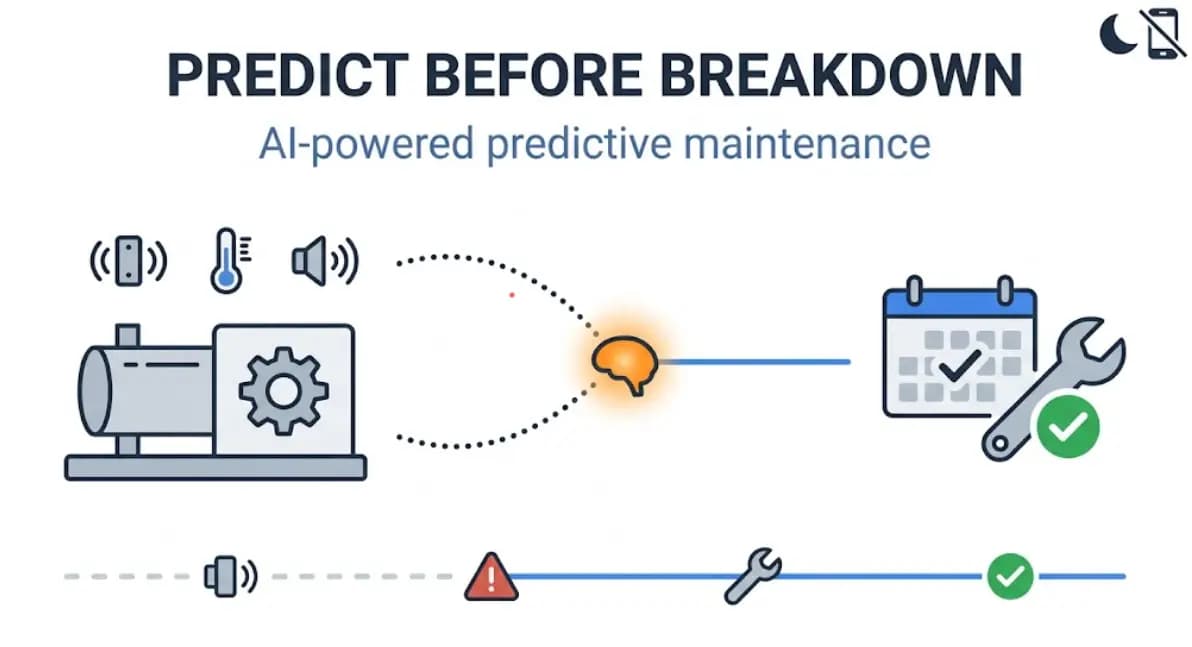
The Machine Failure: How AI Predicts Breakdowns Before They Stop Production
Recent
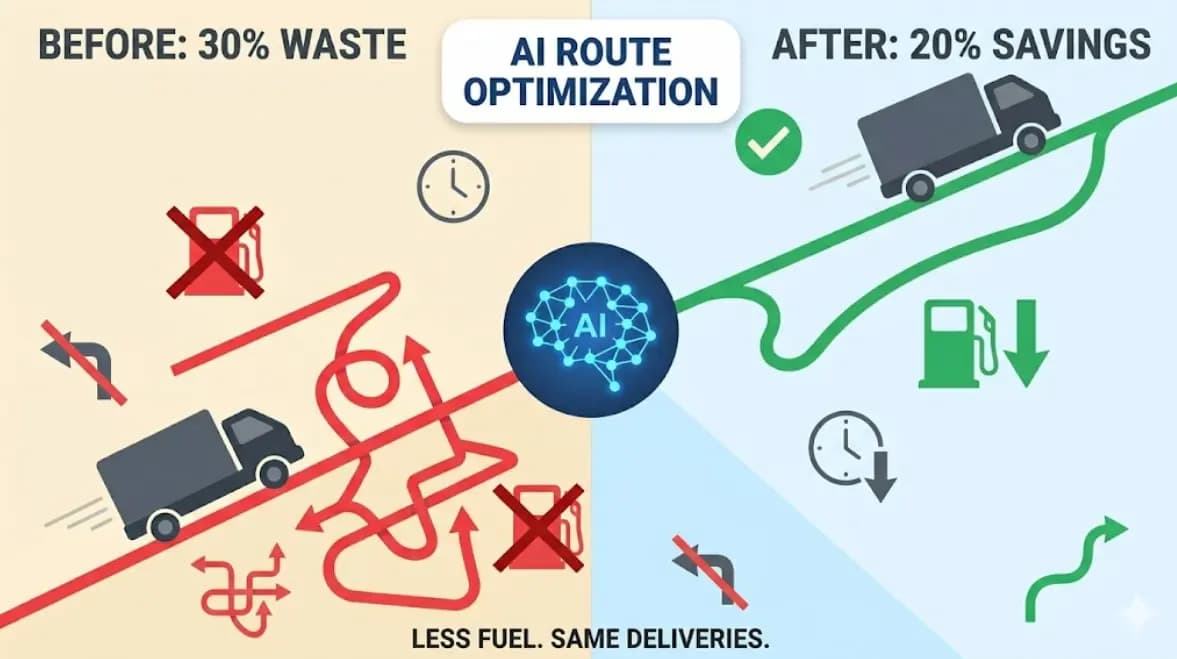
The Route That Bleeds Cash: How AI Cuts Fuel Costs Without Reducing Deliveries
Recent

The Fraud Paradox: How AI in Ecommerce Blocks Criminals Without Blocking Customers
Recent